Advocate
New! Watch CEO Stanfort Perry’s State Senate Testimony on barriers to employment.
NYS Budget: Disability Services Advanced
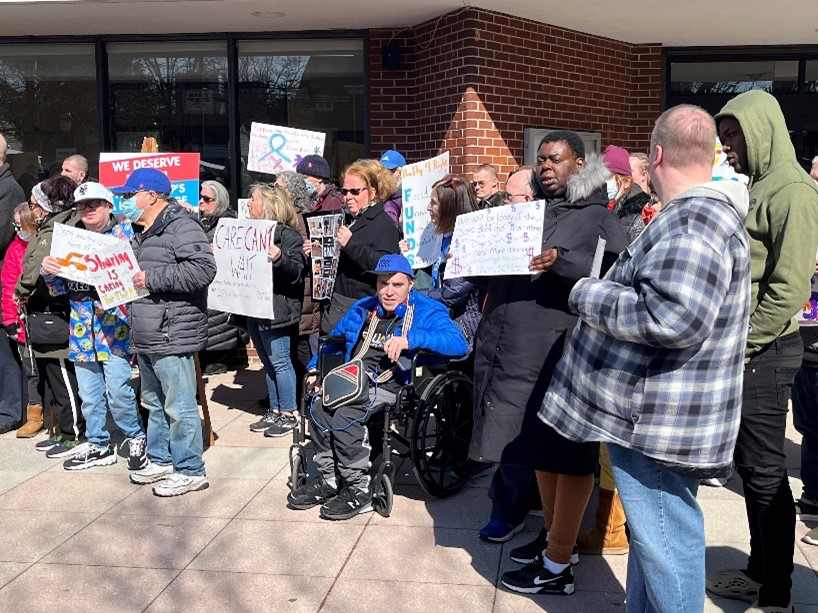
Your advocacy helped secure meaningful investments in disability services as Governor Hochul and the New York State Legislature included a 2.7% Targeted Inflationary Increase in the enacted state budget. The budget also includes flexible attestation language, offering providers with greater flexibility to use these funds where they are needed most to support people with intellectual and developmental disabilities. We are grateful to our elected officials for recognizing the value of these essential services.
Federal Issues to Consider
Federal funding has its own distinct process and priorities. Below are the priorities our community is seeking to advance. If you’re interested in learning more about the basics of federal funding, Medicaid, IDEA, and hold a successful meeting with legislators. Check out these videos from the 2026 Disability Policy Seminar.
Stay Informed: Justice Department Memo on Community-Based Services: The U.S. Department of Justice recently issued an opinion on community-based services outlining the Executive Branch’s interpretation of the landmark Olmstead decision. Read responses from NYS OPWDD Commissioner Willow Baer and The Arc of the United States to learn more about how this opinion could shape disability policy moving forward. Also, check out this one-pager from NYDA about how we can continue to protect the right to community-based living.
Protect Medicaid Access for People With Disabilities
In less than 3 minutes, send lawmakers an email asking for their support and plans to ensure Medicaid-funded home- and community-based services remain available for Long Islanders with intellectual and developmental disabilities (IDD).
Federal Bill Recognizing DSPs Advances
The bipartisan Recognizing the Role of Direct Support Professionals Act has advanced unanimously out of the Senate Homeland Security and Governmental Affairs Committee—a major step toward creating a dedicated federal occupational classification for DSPs. A distinct classification will improve data on the workforce, helping inform policies that strengthen recruitment, retention, and investment in the professionals who support people with disabilities.
Protect Special Education
Students with disabilities are public education students first. Recent federal proposals could move key special education and civil rights functions out of the U.S. Department of Education, raising concerning about consistency, oversight, and accountability for students with disabilities.
Learn More
-The Arc US, “Moving Special Education and Civil Rights Out of Education Department Risks a Patchwork of Rights for Students With Disabilities”
-The EDU Ledger, “Civil Rights and Disability Offices Relocated from U.S. Department of Education in
Broader Federal Restructuring Effort”
Advance Federal Recognition of the DSP Role
The “Recognizing the Role of Direct Support Professionals (DSPs) Act” (S.3211, H.R. 6137) would require the federal Office of Management and Budget to consider updating the Standard Occupational Classification (SOC) and recognizing the DSP role as a distinct profession. This would lead to data collection and ideally more robust funding.